Dear Starry-Eyed Travellers,
Greetings from Riaan and I for Volume 36. We can not believe where this year has gone, it is September already. We are actively looking at new and exciting safaris all across Africa for 2024 and 2025, and would love it if you would keep in touch with us. We wish you a happy Spring in the Southern Hemisphere or Autumn/Fall in the Northern Hemisphere – especially a relief from all that heat…
Best wishes,
Conrad and Riaan.

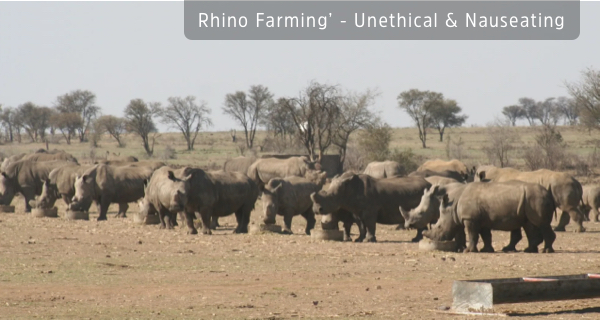
There seems to be a bright light at the end of a really long, dark conservation tunnel which has been going on for many years. John Hume, the controversial South African “Rhino Farmer” who put his farm on auction 4 months ago (wanting around $100 million for his farm) has a buyer. He is bankrupt and had no-where to go but to auction off his ‘farm’.
Just to put this in perspective: John actively farmed both black and white Rhinos, like they were cattle. To the point that at the moment, on this farm, there are 2000 Rhinos; possibly representing 17% of the total white rhino population on Earth!
The point of all this? Lopping off their horns every now-and-again and then stashing these horns in a highly secret location. The idea was this: he was waiting for our grossly corrupt government to ‘legalize’ the trade in Rhino horn with their beloved China etc. As our esteemed readers would know, rhino horn is used in China and Vietnam etc. for all kinds of traditional medicine, especially for men’s nether regions being less-than-ideally active. If the trade was legalized, John was to make ka-zillion dollars from all of this.
There was massive push-back on the legalising of international rhino horn trade from a plethora of conservation bodies from all over the world, and the legalised trade never happened (thank god). So now, the plight of these 2000 rhinos was in limbo; one can imagine the poachers and government officials licking their lips.
HOWEVER, great news as of last night. Our ultimate African NGO, African Parks, has bought the farm and will be translocating all the rhinos to their conservation frontline parks all over Africa! So the fate of all these rhinos is safe! Read more by clicking HERE. A most marvellous, positive conservation story.
“Our point at Starry Starry Nights is that, Rhinos, in all their splendour and wildness, can not and should not ever be considered a resource or commodity to be traded, like cattle or sheep. The thought appalls us to our core. This must never happen again. A fantastic conservation success story as our breaking news story”.

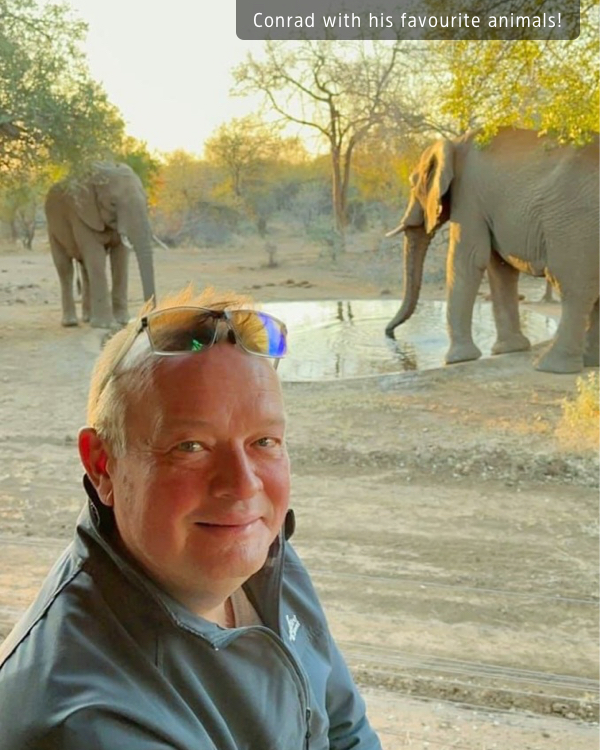
We have just enjoyed our International Elephant Day on Saturday the 12th August. It is a day to celebrate the largest land mammals, in their incredible and intelligent splendour and pugnacious and charming behaviour. From Benin through to the Knysna forest in the very south of South Africa, from Senegal through to the coast of Kenya, scientists, behaviourists, conservationists and guides from all over Africa celebrated these marvellous behemoths.
To spend time with Elephants, is possibly one of the most special activities in Africa, and something that is very close to our hearts at Starry Starry Nights. As most of you know who have traveled with me, they are my very favourite of all mammals, and are imbedded deep in my soul and psyche. There has been a recent aerial survey in the largest potential conservation area in the world, called the Kavango – Zambezi Conservation Zone with Victoria Falls being right at the “centre” of this amazing and ambitious conservation core idea.
The survey was carried out over 8 months and the results are inconclusive that elephant numbers are stable. With Botswana having the “lion’s share” of this huge area’s conservation zone (northward of 150,000 elephants) we have to really tread carefully in managing the largest herds of these magnificent creatures. The survey results can be found HERE.

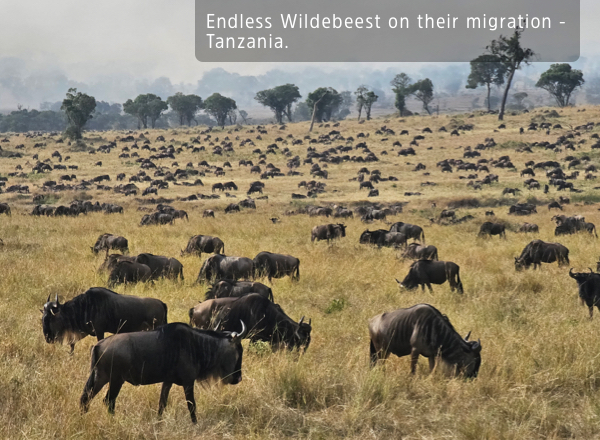
Conrad has just returned from a marvellous family safari in Tanzania’s northern circuit. We usually stay clear of the “crazy” season in Tanzania and Kanya (June through September), but sometimes, one has to just jump in. Why “crazy”, you may ask? Well, it is all about the unbelievable number of tourists – as in thousands.
Everyone is crowded through the Serengeti and Maasai Mara systems, hoping to get a glimpse of the famous Wildebeest crossing the Mara River (in both directions; silly creatures). The Ngorogoro Crater can be worse – one has a descent and an ascent road, and one can literally be in a bumper bashing in trying to get out of a safari 4×4 traffic jam. In the Wilderness! So, how does one manage this, clearly far-from-ideal situation?
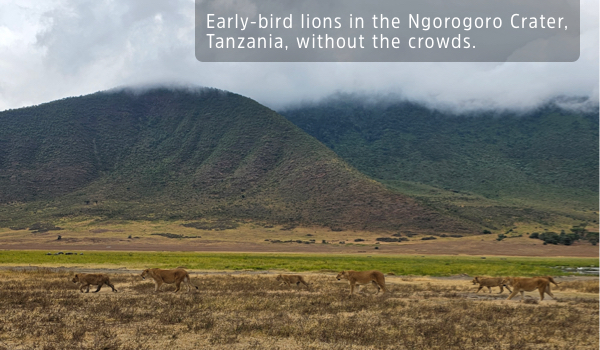
As they say in the classics, “The Early Bird Catches The Worm” – we were at the various gates right as they opened – around 6am, and were back at the various lodges for lunch, thus avoiding all the masses of Cruisers. But, boy was it worth it – we had some scintillating sightings – lion, elephant, cheetah with 5 cubs, leopards etc – East Africa really shone for us. The bottom line is that if carefully managed and guided professionally, the East African “crazy” season can be hugely rewarding and one CAN, at a push, avoid the crowds.
I hear the next question, of Starry Starry-eyed travellers: “When is the best time to go see the migration?”. Well, we will make sure that the time of the year that you chose, will be managed so as to maximise the Migration and the various river crossings. There is not one real stand-out time to visit Tanzania or Kenya. So, it may be time to come on safari there with us to come find out…

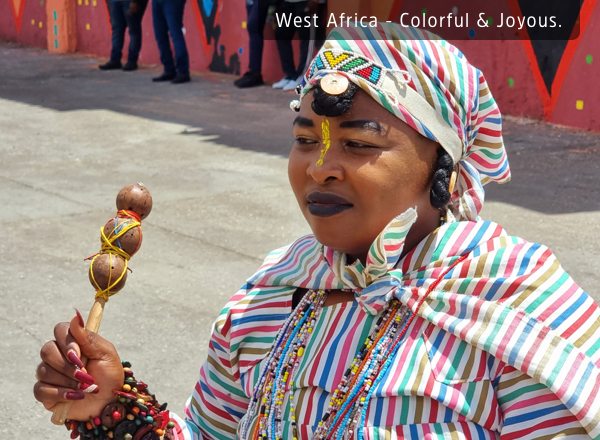
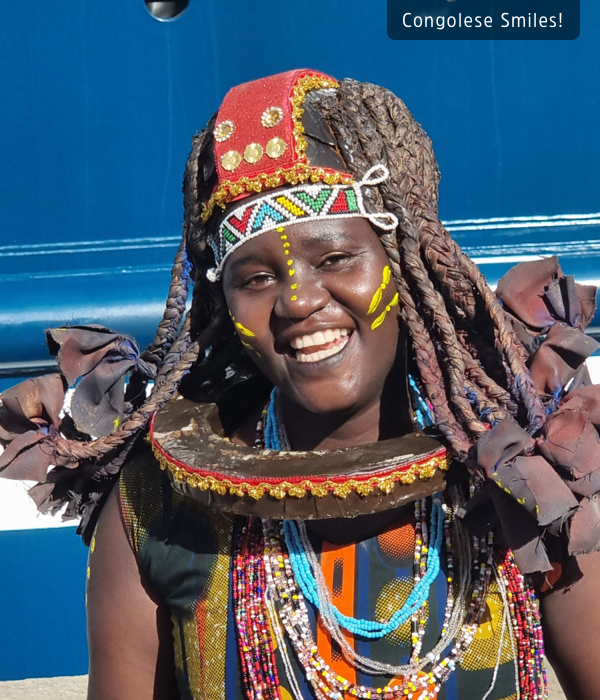
We have just been involved in a huge 6 week expedition all the way from Cape Town to Dakar, Senegal, visiting some of the most unique and crazy West African countries, rarely visited. Think Angola, Gabon, São Tome and Principe, Benin, Togo, Guinea-Bissau etc. As people let us Africans know, Africa is not for sissies, and this expedition was exactly a showpiece of that invaluable information.
It can be really tough, especially West Africa. We had horrendous weather off Gabon and Congo, and struggled to land with our zodiacs, we had to have a Nigerian border ship escorting us around treacherous pirate waters, and some of the shore excursions were really tough. But hey, who gets to visit some of these very rarely – visited countries?
It was massively memorable. In fact, the author of “The Africa House – Shiwa Ngandu” – and the current Chief Foreign Correspondent for the Sunday Times in London, Christina Lamb, wrote this in the paper. It does leave me with a sour taste in my mouth, and is not quite accurate, but it was great publicity for us. We will see if this is to be repeated for 2024/2025. It will probably be very different than what was on offer this season.

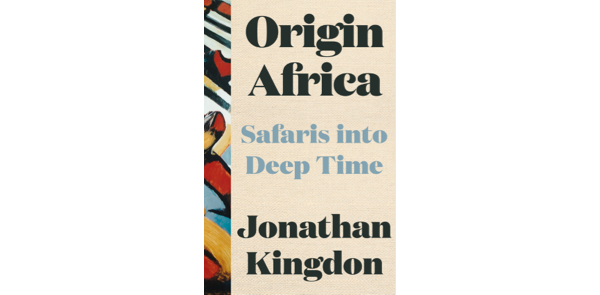
This find has to be one of the most amazing books on natural history that I have read in a long, long time! Jonathan Kingdon, the marvellous natural history author of many African mammal books (which we all had to study as aspiring guides in the 1990s) has set out a memoir of stunning personal depth as he looks at his life growing up in Tanganyika (now Tanzania).
The memories are heart-warming, the artwork and scribbles throughout very touching, but the prose and his respect for all things African absolutely astounding. For instance, a quote from one of his chapters:
“The fount of our intellect, our creativity, our curiosity, our capacity for inspiration, even our sense of humour and rhythm, arose in Africa, probably long before we became sapient. All need exploration as never before, all need cultivation. Integral to that end, we must acknowledge our mother-continent’s nurture of our species and make our continent what it has always been – nursery, school and university of human origins. In our Children’s hands, armed with an ever-expanding knowledge that can be tested for its truthfulness, Africa becomes the true primary source of our natural history, our origins – the ultimate setting for future universities of human creative thinking, creative making, creative living”.
How absolutely profound is that! Find yourself a copy!

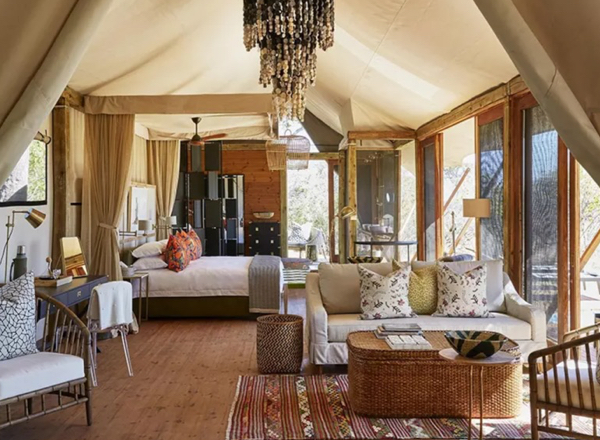
Natural Selection is one of the most astounding lodge owners and operators in southern Africa. Founded by a plethora of ex guides and significant characters from “other” safari companies, they are truly unique in what they offer. From the deserts of the Namib to the Kalahari, through to lushness of the Okavango and beyond, their camps are truly exceptional.
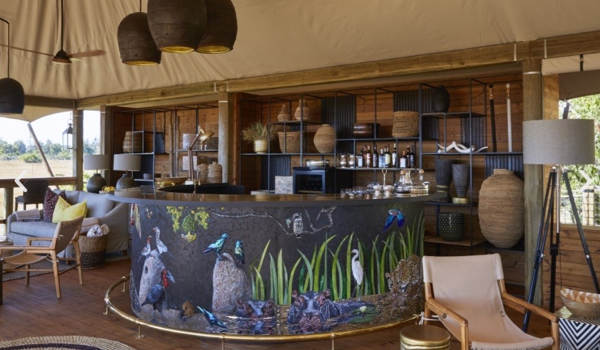
A huge emphasis for the company is on community and especially women upliftment, and we applaud that, coming to the end of international Women’s month. We absolutely loved Tuludi Camp – contemporary, stylish, understated, exceptional guiding and hosting; and as for that mosaic bar in the main area, utterly divine!