
Everyone in our African travel industry is upbeat, finally. Never mind about the 6th/12th or 23rd wave of COVID, it seems that opening of the economies on the continent supersedes the draconian way that the countries were closed in the past two and a half years. It is most refreshing.
Of course, there is an upturn in our guests wanting to return to our continent – and we are ready to host them. The travel shows in southern Africa are back and agents and operators from all over the world are ready to send guests to our beloved safari destinations.
It may be opportune for a rethink about coming to Africa in the coming months. Riaan and I were most fortunate to tour our western side of South Africa (towards the Kalahari) and some of the biggest rainfall in the past 20 years resulted in massive water-flows over some of our rivers. Please see the above video from the amazing Augrabies (meaning huge noise in the indigenous Nama! language).
Then we feature something very different in terms of utter uniqueness. Sangha Lodge in the least-visited Central African Republic.
It must rank as one of the most amazing wildlife encounters in Africa and is owned and run by pangolin-obsessed husband and wife team – Rod and Tamara Cassidy. Conrad is heading back there in November on safari, which will be a hoot!
We hope that wherever the world you are in now, in whichever way the silver lining you may be in that you are well and please keep Africa in your thoughts.st spiny lobster, possibly one of the best culinary delights of the continent.
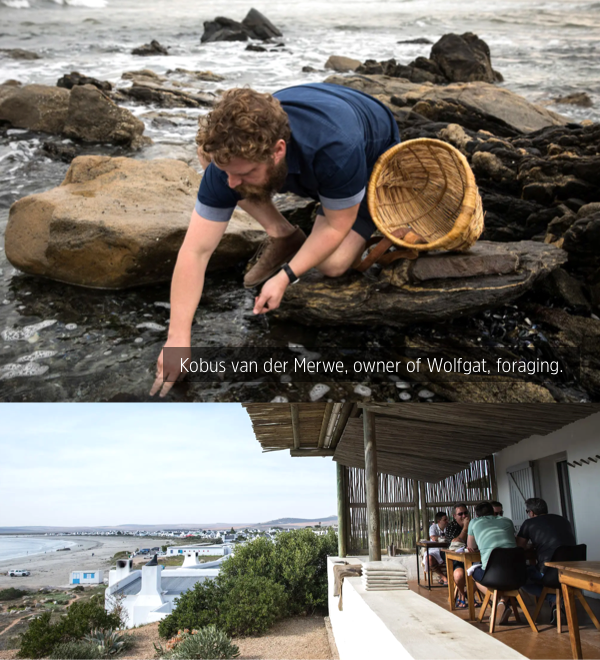
Driving down the coast to a hamlet called Paternoster, a very humble restaurant called Die Wolfgat has been voted many times as part of the best 50 restaurants on our planet. It is one of the places in Africa that many people can drive in a rental car – and the area is utterly marvellous for exploration. From Cape Town top Namibia is most definitely an option.

The west coast of South Africa is seriously special. We had the privilege of going to see the huge natural “flower event” a couple of years ago – it was utterly mesmerising.
This time we went in our summer rains (the flowers come out during the winter Cape Town rains) and the landscape had utterly transformed.
Southern Africa has had some amazing rains over the past months, so much that driving through the Kalahari, as we did on route to Port Nolloth, the whole desert was awash in green – green leaves of the ancient Camel-thorn Acacias, and green Kalahari grasses covering the usually parched red Kalahari dunes. We even drove through thunderstorms which were utterly intense in their ferocity.
And then getting to the coast itself, we had some fabulous views of Heaviside’s dolphins offshore (an endemic) and tested the incredible west coast spiny lobster, possibly one of the best culinary delights of the continent. Driving down the coast to a hamlet called Paternoster, a very humble restaurant called Die Wolfgat has been voted many times as part of the best 50 restaurants on our planet.
It is one of the places in Africa that many people can drive in a rental car – and the area is utterly marvellous for exploration. From Cape Town top Namibia is most definitely an option.

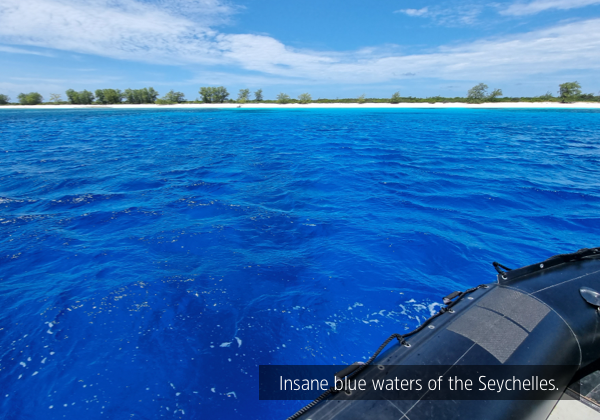
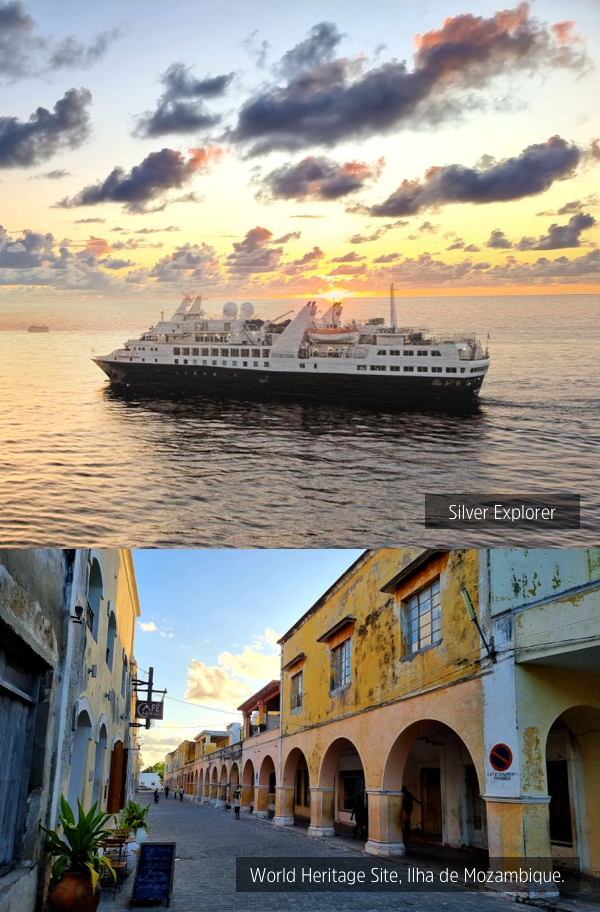
After two and a half years of literally being in the non-traveling-wilderness – not knowing when Africa would open up and what would happen to our business, it was a monstrous relief to be invited by Silversea Expeditions to be part of two rather grand trips – one from Cape Town up the eastern Coast of Africa, taking in the delights of South Africa, coastal Mozambique and the southern Seychelles atolls; ending in Zanzibar, and then the second one being to fully immerse ourselves in all that the Seychelles had to offer. From the southernmost island called Assumption all the way to the capital, Mahe.
There were innumerable highlights – from the coast of South Africa to the enthralling Ilha de Mozambique and its dilapidated yet utterly charming colonial Portuguese architecture and painted coffee shops and inns to insanely azure waters of southern Seychelles. For me the ultimate highlight through the two expeditions was that the coral in the Seychelles is actually growing back.
It is a feel-good story that we all need right now in our world. Years of bleaching have really hammered the corals of the western Indian Ocean, but this was the first time in many years that we saw the coral growing back and becoming healthy ecosystems again. Was it due to the LaNina phenomenon? Or that there was so little visitation over the past three years to the islands that they could recover? Who knows, but at Aldabra and Farquhar in particular, it amazed us all in that the coral was very much on the rebound! What great news!

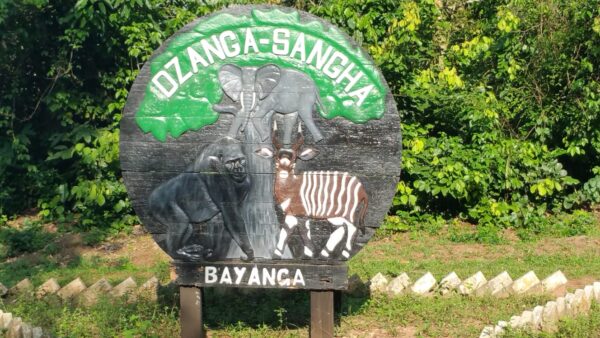
To get to the Central African Republic (CAR) is a mission! It is very unstable, very remote and has had a mad history (in the 1980s, there was even a cuckoo-self-proclaimed Emperor, Bokassa with gold shrine and all). It also boasts some of the most incredible intact ecosystems in the whole of Africa. Not only primary, untouched rainforest, but endless grasslands of the southern Sahel, mountains, and immense rivers.
So, to be able to explore this mid-African country is a definite bucket list. Also, the ground-breaking conservation body African Parks has really invested in the country – and there are plans to boot to develop this country to one of Africa’s biodiversity showcases. In the World-heritage site of Dzanga-Sanga Biosphere Reserve are an extraordinary array of habitats.
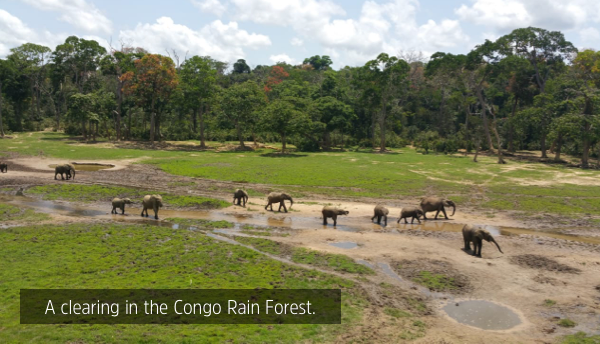
Primary rainforest gives way to the famous “bai’s” – open, naturally cleared areas, deep within the forests, where mineral-rich water seep from the earth and all manner of creature come out of the forest to enjoy the rare nutrient-filled water. Basically, like an animal spa.
One can sit on one of the hides strategically situated at some of these bai’s all day, and the plethora of animal’s stream in and out of the forest all day. Think never-seen animals such as forest elephant (pink ivory, giant river hogs, Bongo antelope (the most gorgeous of all antelope?), thousands of African Grey parrots with their striking red tails and insane repertoire of noises; forest sitatunga, strange fresh-water crayfish etc.
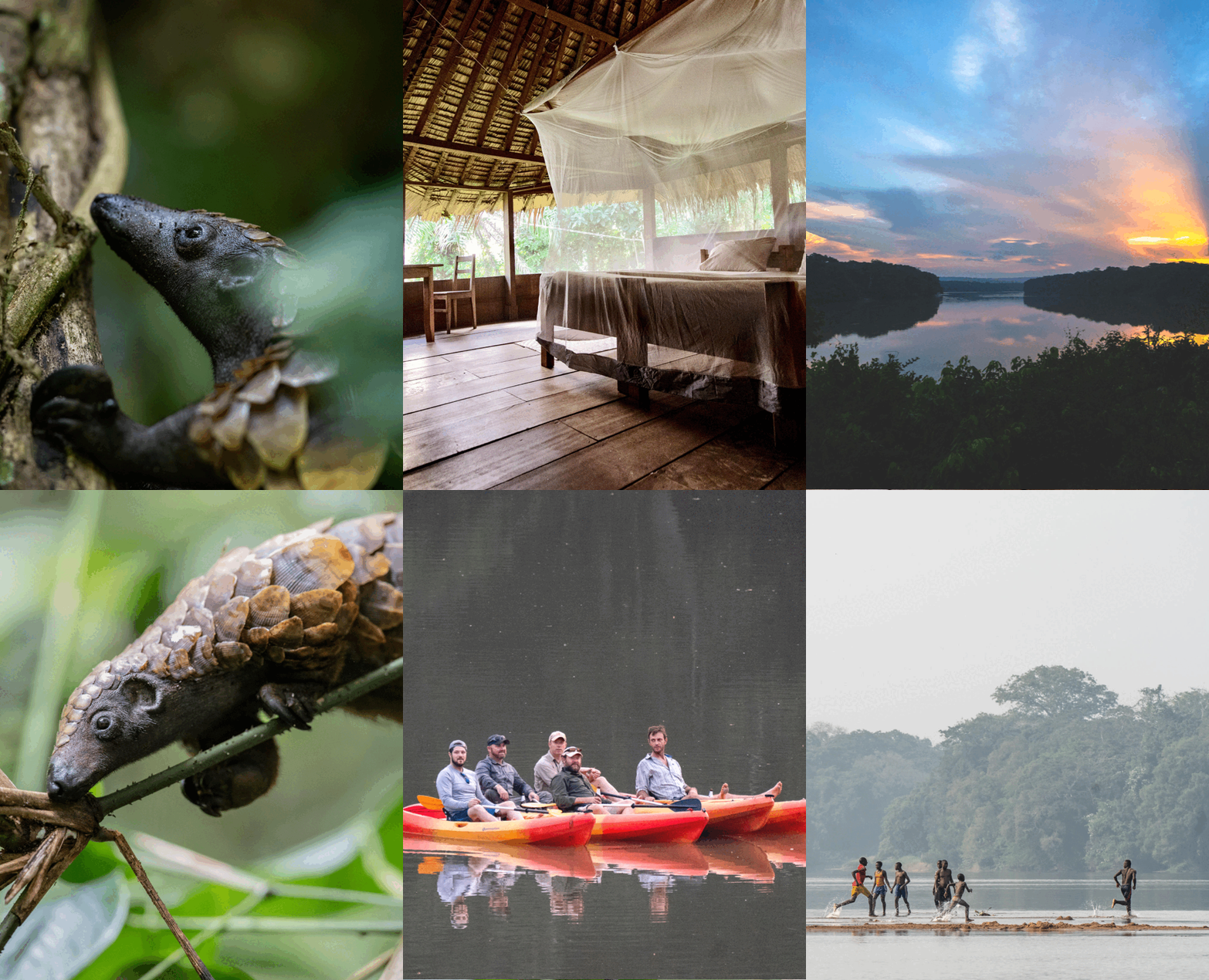
One can also walk and interact with the lowland gorillas (the oddly red-capped and smaller cousins of their famous mountain dwellers in Uganda and Rwanda) and see at least 7 species of monkey. The highlight possibly (there are so many at Sangha Lodge) is that Rod and Tamara have a pangolin-saving NGO and community outreach program.
If you are lucky, one is able sometimes to see the forest Pangolins which sometimes hang out at the lodge and are ultra-rare. Night walks are also insanely rewarding – have you ever seen a Poto?
Nope, neither of us – but it is on the have-to-see list. But they are there and can be seen by Rod and Tamara’s infra-red cameras which are used extensively on night walks in the bush. And as for the birding! It is here that some of Africa’s most wanted birds are found, including the almost-mythical Pycathartes.
Sangha Lodge is literally a destination on its own, making a visit there a minimum of 7 full days (flights yes, but also so much to do and see). It literally has been hailed as one of the ultimate lodges and experiences in the whole of Africa. One can connect with the capital, Bangui by means of Kenya Airways once a week.

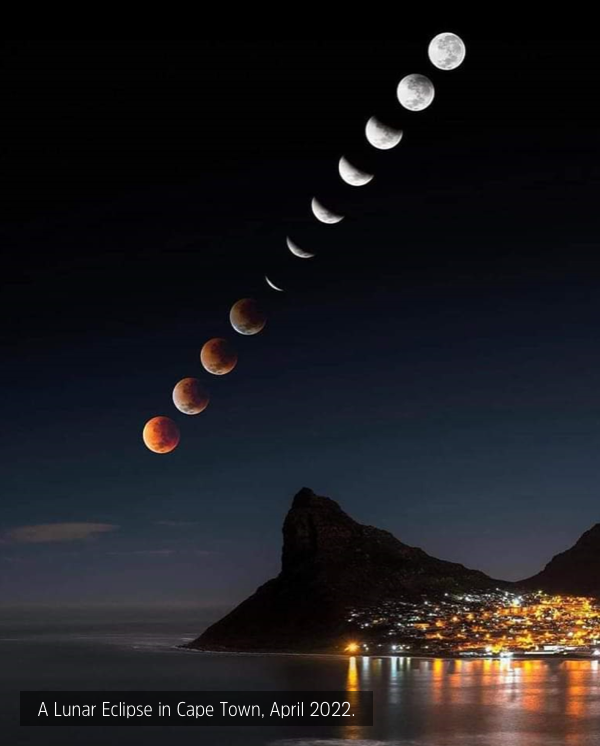
In April, the morning sky to the east of us was something of utter beauty. We had Jupiter, Venus, Mars, Saturn and our Moon all there – almost at touching distance. And being on the Ocean in the Seychelles without any light pollution made this a rather special experience. Look at what is happening in a month’s time! What an event again! Also in Cape Town at the end of April – a very rare Blood moon was observed (in Johannesburg, we had clouds from horizon to horizon, so unfortunately we could not observe this. But I love this time-lapse photo taken from one of our other favourite places in Africa, Tintswalo Atlantic.